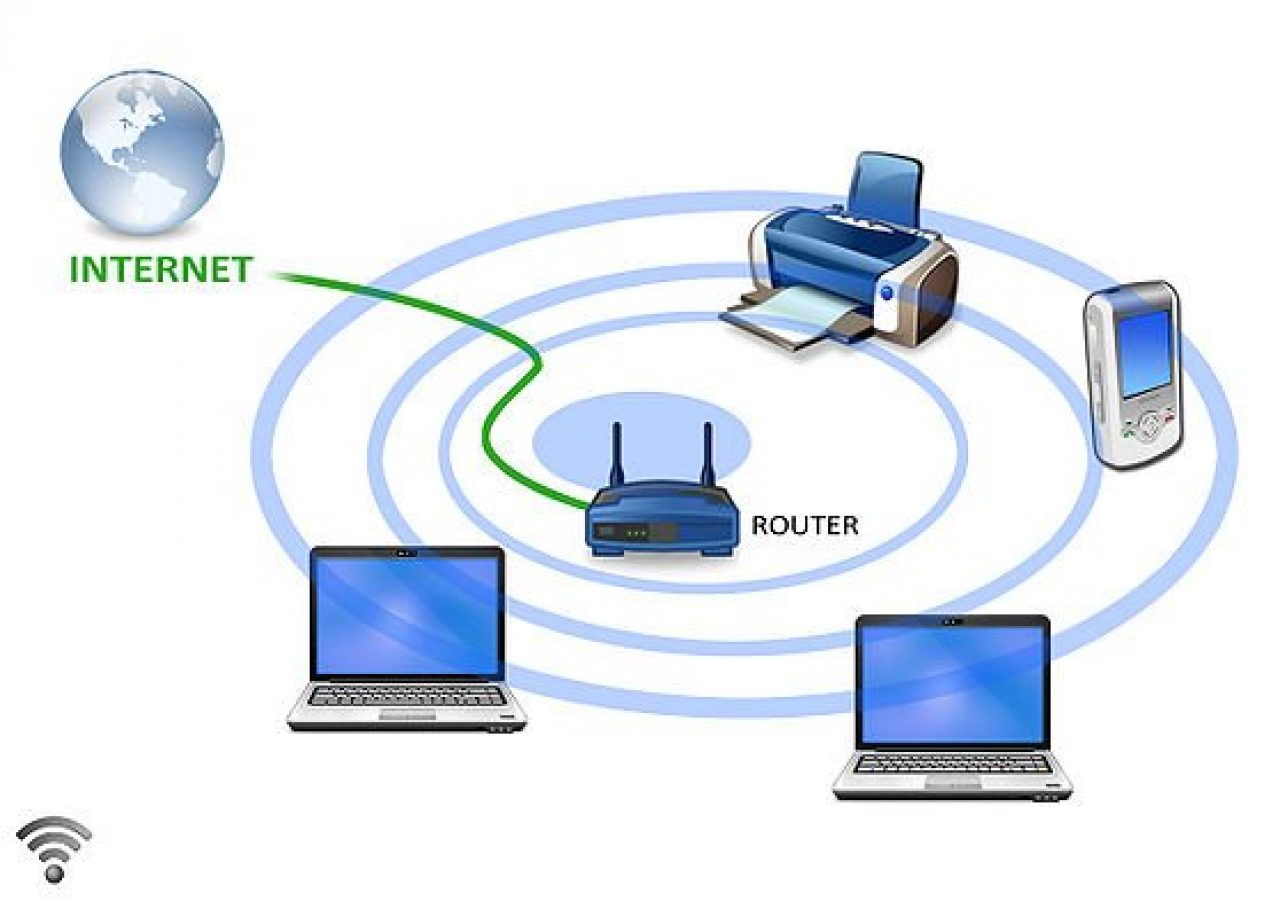
What Is Wi-Fi?
Wi-Fi is a wireless networking technology that allows devices such as computers (laptops and desktops), mobile devices (smartphones and wearables), and other equipment (printers and video cameras) to interface with the Internet. It allows these devices–and many more–to exchange information with one another, creating a network.
WHAT IS LIFI?
The term “LiFi” is a new concept, coined back in 2011 at a Ted Talk given by Professor Harald Haas at the University of Edinburgh. He demonstrated how we could use visible light as a way to both send and receive data. This is a revolutionary idea given its direct contrast to how WiFi works. In their smartphones it allows us to use microchip-encoded LED light bulbs in our homes to send and receive data.
Advantages of WiFi
Convenience
– WiFi allows users to roam the business and access network resources from nearly anywhere. WiFi connects computers, video, security devices, mobile phones and many other devices across the workplace. With the increasing saturation of laptop-style computers and mobile phones, this is particularly relevant as controlled guest access is simple to manage.
Mobility
– With the emergence of public WiFi networks, users can access the internet outside their normal work environment. Most chain coffee shops, for example, offer their customers a WiFi connection to the internet at little or no cost.
Productivity
– For a business, this implies that everyone can be more productive and focus on the assigned task regardless of location. Users connected to WiFi maintain a wide range of speeds as they move from place to place. With increased bandwidth and the right tools on the Internet, staff can collaborate and be engaged much more quickly.
Deployment
– The installation of WiFi requires little more than a single access point (AP) or antenna connected via a data cable to the business router/switch. Using power over ethernet (PoE) eliminates the need for an associated power plug. WiFI networks can scale rapidly for growing businesses, disasters, temp work space and other business conditions without additional wiring, conduit and other issues.
One of the advantages of combined WiFi and wired cable networks is the coverage they offer across the business premises. A combo-WiFi-wire network allows a business to move walls, desks, users, printers, video and other devices at a reduced cost (depending on what you do).
Cost
– WiFi cost/benefit weighs wireline cabling and endpoint costs against WiFi AP and associated endpoint costs (e.g. wireless camers vs. wired cameras) WiFi and wireline cabling work well together to help you grow, change and adapt your business, bandwidth, and office conditions at an effective price point. Each alone has its benefits and challenges, however combo-WiFi and wireline networks give you the best of all business communication now and in the future.
ADVANTAGES OF LIFI
1. SECURITY
This is probably the biggest problem when it comes to WiFi. With more and more devices being connected to each other (IoT), the need to secure networks is at an all-time high. LiFi is a lot more secure in that it uses walls to block light. This keeps anybody outside of a specific room from having access to the LiFi connection.
2. SPEED
Speed is undoubtedly the first requirement for the everyday WiFi user. LiFi re-uses the light spectrum a lot better. In theory the fastest WiFi, on eight 160MHz channels, can deliver 7 Gbps. LiFi can reach speeds of 15Gbps, more than double the speed – that’s a transfer rate of 1875 megabytes per second!




 Sample blog